English
 中文简体
 Español

Search...
What Sets a Hospital Bedspread Apart from Residential Bedding
A hospital bedspread carries demands that no household linen ever faces. In a clinical environment, the same piece of bedding may be stripped, laundered at extreme temperatures, re-pressed, and returned to service dozens of times per month. It must survive repeated contact with disinfectants strong enough to eliminate MRSA and C. difficile without losing structural integrity or color fidelity. It must not harbor pathogens between washes. And in many jurisdictions, it must meet fire-retardancy standards that residential textiles are simply never tested against.
Beyond durability, the bedspread plays a direct role in patient experience. Patients in recovery spend extended hours in bed — often with limited mobility — which means the thermal comfort, surface softness, and weight of the bedding have a measurable effect on rest quality and stress levels. A bedspread that pills, shrinks, or develops rough patches after a few wash cycles becomes a patient comfort problem as much as a procurement one.
Operationally, hospitals handle linen at scale. A mid-sized facility might process thousands of individual linen items per day across wards, ICUs, surgical recovery, and outpatient areas. Speed of turnaround, ease of sorting, and resistance to damage during industrial laundering matter as much to procurement as fabric feel. These combined pressures — hygiene, durability, patient comfort, and operational efficiency — define every specification decision in hospital bedspread selection.
Content
Why Polyester Is the Dominant Fabric in Healthcare Settings
Cotton held its position as the standard hospital textile for most of the twentieth century, largely because of its natural breathability and softness. That position has shifted substantially. Today, 100% polyester and polyester-dominant blends account for the majority of hospital bedspread procurement, and the reasons are grounded in practical performance rather than cost alone.
Polyester withstands industrial wash cycles at temperatures that cotton cannot reliably survive without degradation. It dries faster, which shortens laundry turnaround time and reduces the risk of microbial growth during the drying stage. It resists shrinkage, meaning fitted and flat sheets retain their dimensions across hundreds of wash cycles — a critical factor for beds with specific mattress depth tolerances. Its color stability under repeated bleach and disinfectant exposure far exceeds that of cotton, allowing institutions to maintain consistent visual standards across linen inventories.
For hospitals operating in high-throughput environments, 100% polyester dyed fabric for institutional use offers a combination of performance attributes that blended or natural fabrics struggle to match at comparable cost. Moisture-wicking finishes can be applied to polyester substrates without compromising their wash durability, addressing the breathability concern that once favored cotton. Modern microfiber polyester constructions also deliver surface softness comparable to high-thread-count cotton, eliminating the perception that clinical bedding must feel utilitarian.
Cotton still appears in premium hospital settings — particularly in private rooms and maternity wards where patient experience is a differentiating factor — but the operational economics of polyester make it the practical standard for general ward bedding at scale.
Key Performance Standards Hospital Bedspreads Must Meet
Procurement teams selecting bedspreads for healthcare facilities navigate a layered set of requirements that span hygiene, safety, and material quality. Understanding these standards is essential before specifying any linen for clinical use.
Laundering resilience. Healthcare linens must withstand wash temperatures of 71°C (160°F) or higher — the threshold at which most pathogenic organisms are reliably inactivated within a standard wash cycle. Fabrics that degrade, shrink, or lose tensile strength at these temperatures fail the primary functional requirement before any other standard is even assessed. Thread construction, weave density, and fiber quality all contribute to wash durability; a bedspread rated for 200 or more institutional wash cycles is considered suitable for general ward use.
Thread count and fabric weight. Standard hospital bedspreads in general ward settings typically use fabrics in the 130–180 thread count range. This range offers adequate softness for patient comfort while providing the structural durability that higher thread counts — which use finer, more fragile yarn — do not always maintain under institutional laundering. Plain solid-color polyester fabric in this weight range is the baseline specification for most general-purpose hospital bedspreads, with solid colors also facilitating visual inspection for staining before redistribution.
Flame retardancy. Many healthcare regulations require hospital textiles — including bedspreads — to meet flame resistance standards. The specific requirement varies by country and facility type, but fabrics used in inpatient settings are commonly tested against standards such as BS 7175 (UK) or NFPA 701 (US). Inherently flame-resistant fibers or certified topical treatments are both acceptable approaches, provided the treatment remains effective through the fabric's service life.
Chemical and certification compliance. OEKO-TEX Standard 100 certification verifies that textile products have been tested for harmful substances including formaldehyde, heavy metals, pesticide residues, and pH levels outside the safe range for skin contact. For hospitals treating immunocompromised patients, paediatric wards, or burn units, this level of chemical verification is particularly relevant. ISO 13485 quality management certification from the supplier provides additional assurance of consistent production standards.

Types of Bedspreads Used in Hospital Settings
No single bedspread type serves every clinical application. Different wards, patient populations, and care protocols call for different textile solutions.
Plain-weave flat bedspreads are the workhorse of general ward bedding. Constructed from solid-colored polyester or poly-cotton fabric, they are lightweight, fast-drying, and simple to launder and fold. Their flat construction allows staff to visually inspect the full surface for staining or damage in seconds. Used across medical, surgical, and rehabilitation wards, these represent the largest volume of hospital linen procurement globally.
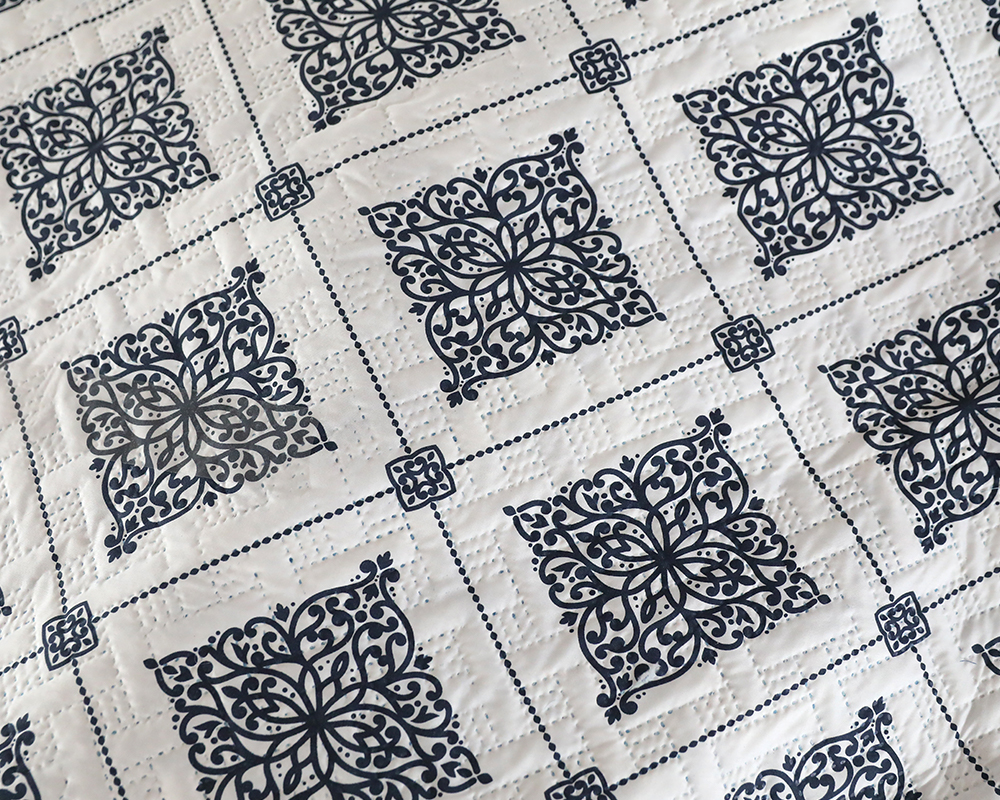
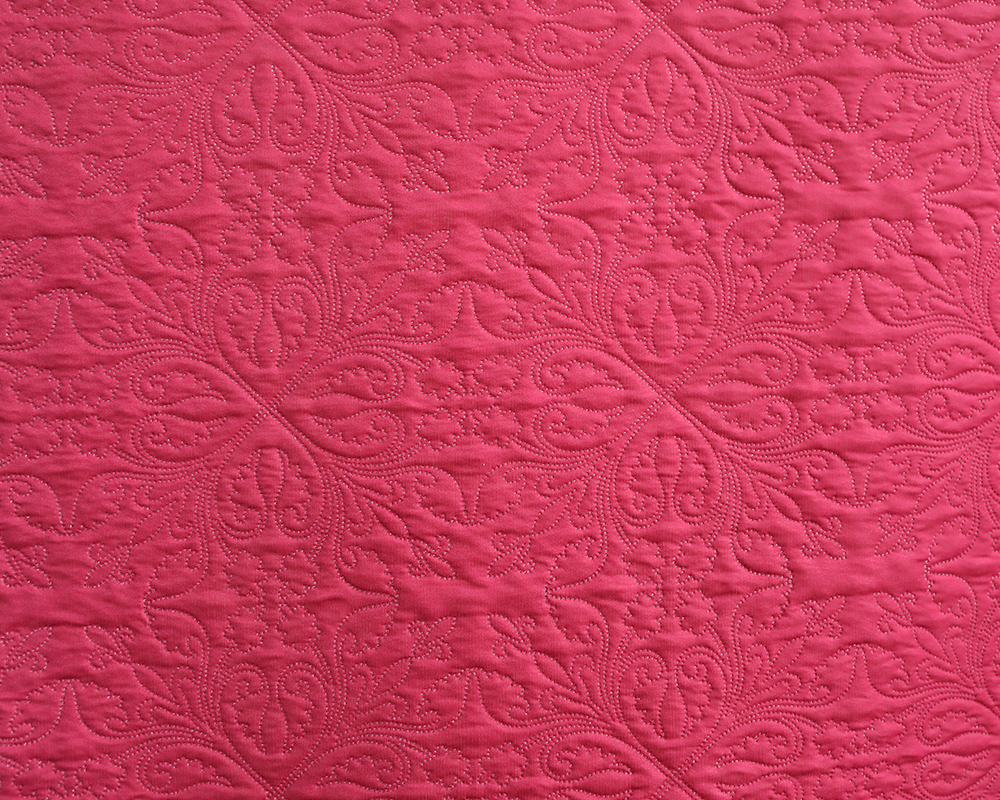
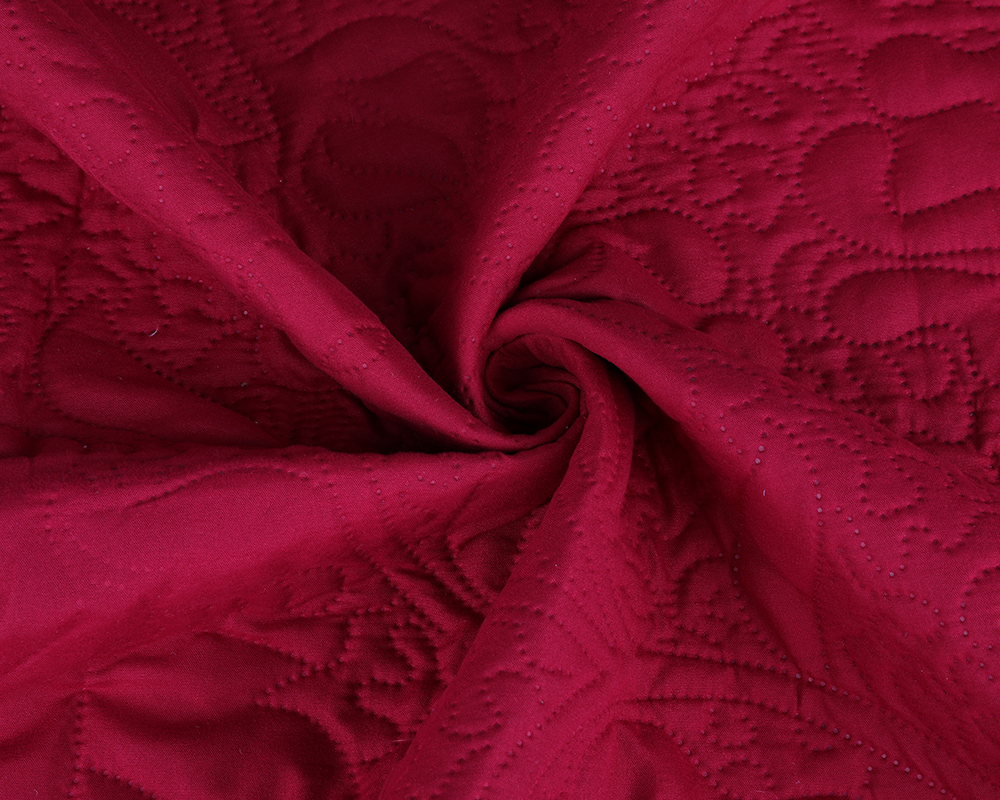
Ultrasonic quilted bedspreads provide a layer of insulation and improved surface softness without the bulk of a traditional stitched quilt. The ultrasonic bonding process fuses fabric layers through heat and pressure rather than thread, which eliminates the needle holes that conventional quilting creates — reducing potential pathogen entry points and making the surface easier to wipe clean between patient uses. Ultrasonic mattress covers use the same bonding technology and are often specified alongside quilted bedspreads in settings where both warmth and infection resistance are priorities.
Bedding sets without fiber filling are increasingly preferred in high-turnover environments such as day surgery units, outpatient recovery areas, and short-stay wards. Without internal batting or fill, these items are faster to launder and dry, and present a lower risk of moisture retention inside the textile — a factor that can support microbial growth if drying is incomplete. Polyester bedding sets without fiber filling are well-suited to these applications and simplify laundry processing logistics.
Disposable single-use bedspreads made from non-woven polypropylene or SMS material are used in isolation wards, high-infection-risk areas, and surgical preparation settings where eliminating cross-contamination risk outweighs the cost of single-use consumables. These are not reprocessed; they are disposed of after each patient contact, removing the laundering variable from infection control calculations entirely.
Hospital Bedspread Selection: A Comparison
| Bedspread Type | Wash Durability | Drying Speed | Patient Comfort | Infection Control | Best Application |
|---|---|---|---|---|---|
| 100% Polyester Plain Weave | Excellent | Fast | Good | High | General wards, surgical recovery |
| Ultrasonic Quilted Polyester | Very Good | Moderate | Very Good | High | Medical wards, rehabilitation units |
| Poly-Cotton Blend | Good | Moderate | Very Good | Moderate–High | Private rooms, maternity wards |
| No-Fill Polyester Bedding Set | Excellent | Very Fast | Moderate | Very High | Day surgery, short-stay, outpatient |
| Disposable Non-Woven | Single Use | N/A | Basic | Highest | Isolation rooms, surgical prep |
Laundering Protocols and Infection Control Considerations
The bedspread itself is only one part of the infection control equation. How it is collected, transported, laundered, dried, and redistributed determines whether it remains a hygienic asset or becomes a transmission risk. Procurement decisions and laundry protocols are inseparable.
Wash temperature and chemistry. Effective decontamination of reusable hospital linen requires water temperatures at or above 71°C (160°F), maintained for a minimum hold time — typically at least 25 minutes at temperature. Where low-temperature washing is used, thermolabile laundry disinfectants must be validated to achieve equivalent microbial reduction. Bleach-based disinfectants are effective but accelerate fabric degradation; procurement specifications should account for reduced service life when aggressive chemical protocols are standard practice at the facility.
Handling and transport. Contaminated linen must be bagged at the point of use and transported in sealed, clearly marked containers to prevent cross-contamination during transit. Clean and soiled linen must never share transport routes or storage areas. This separation extends to storage rooms: clean bedspreads should be kept covered until point of use, protecting them from airborne particulates and contact contamination in corridors and storerooms.
Inspection and retirement. Every bedspread returning from laundry should be inspected for fabric integrity — worn areas, tears, or thinning patches compromise both the hygienic barrier and patient comfort. A rotation system that tracks wash cycle counts, where operationally feasible, allows timely retirement before fabric failure occurs in service. Replacing linen on a scheduled cycle rather than a reactive basis reduces both patient safety incidents and unplanned procurement costs.
The U.S. Centers for Disease Control and Prevention provides detailed evidence-based guidance on the handling, laundering, and storage of healthcare textiles, including bedspreads and blankets, in its Guidelines for Environmental Infection Control in Health-Care Facilities — Laundry and Bedding section. These guidelines are a primary reference for infection control practitioners and linen procurement teams establishing or reviewing facility-wide textile management protocols.