English
 中文简体
 Español

Search...
Cotton Gets the Marketing. Polyester Gets the Purchase Order.
Walk through the lobby of almost any hotel and you will find the word "cotton" somewhere in the brand language — on the in-room card describing the linens, in the amenity descriptions on the booking page, or in the general promise of a luxurious sleep experience. Step into the laundry facility on the service floor and you will find something different: industrial washing machines running at high heat, fast-dry commercial dryers, and a pressing need for bedding that survives this cycle day after day, year after year.
The gap between what hotels say about their bedding and what they actually buy is not hypocrisy — it is operational realism. Polyester and polyester-blend fabrics have earned their place as the dominant material in commercial hotel bedding not by outperforming cotton on guest perception, but by decisively outperforming it on every metric that determines the true cost of bedding over its operational life.
This article explains why — and what that means for hospitality procurement teams sourcing fabric and finished bedding at scale.
Content
- 1 The Operational Reality of Hotel Laundry
- 2 Why Polyester Outperforms Cotton in Institutional Settings
- 3 The Role of Microfiber in Modern Hotel Bedding
- 4 Ultrasonic Quilting: The Fabrication Advantage Hotels Rely On
- 5 Color and Print: Why White Isn't Always the Answer
- 6 How to Spec and Source Polyester Hotel Bedding Fabric
The Operational Reality of Hotel Laundry
Before evaluating any bedding material, it helps to understand the environment it will operate in. Hotel linen does not live the quiet life of a home duvet cover, washed monthly and stored between uses. A room that turns over daily puts its bedding through an industrial washing cycle as often as 300 times per year. The wash conditions are severe: water temperatures of 60–90°C, heavy commercial detergents, chlorine-based bleaching agents for white linen, and mechanical action inside large-drum machines that would destroy domestic-grade fabric in weeks.
Against this backdrop, the traditional argument for pure cotton — that it is soft, breathable, and natural — runs into a hard operational reality. As the professional hotel bedding buying guide from WebstaurantStore notes, hotel sheets get washed frequently, which makes durability under laundering a primary specification requirement — not a secondary one. A fabric that feels exceptional on the first night but loses its integrity after 50 washes fails the hotel's actual needs, regardless of how it performs on a product description page.
Polyester was built for exactly this environment. Its synthetic polymer structure is chemically stable under conditions that degrade natural fibers, and its dimensional stability — the ability to return to its original shape and size after washing — is dramatically superior to cotton across high-cycle industrial use.
Why Polyester Outperforms Cotton in Institutional Settings
The performance advantages of polyester and polyester-dominant blends in hotel laundry operations are concrete and measurable. They fall into four primary categories:
- High-temperature wash resistance — polyester retains its tensile strength and surface integrity at the 60–90°C temperatures required for commercial sanitation. Cotton weakens progressively at these temperatures, leading to thinning fabric, pilling, and eventual tearing at stress points like hems and corners.
- Dimensional stability — polyester does not shrink. A fitted sheet that shrinks after 20 washes no longer fits the mattress correctly, creating a guest experience problem and a replacement cost. Polyester sheets return to their original dimensions wash after wash, maintaining consistent fit across the full product lifespan.
- Color retention — for white linen, this means resistance to the yellowing that affects cotton over time, even with bleach treatment. For dyed or printed bedding, polyester's synthetic dye system — disperse dyes bonded into the fiber rather than sitting on the surface — delivers far superior wash-fastness than reactive dyes on cotton. The result is bedding that looks the same after 200 washes as it did on arrival.
- Quick-dry performance — polyester's low moisture absorption means it exits the dryer faster than cotton. In high-volume hotel operations where linen turnaround is a bottleneck, this translates directly into operational efficiency: faster cycle times, lower energy consumption per kilogram of linen, and reduced risk of musty odor from damp fabric sitting too long before use.
For hotel properties sourcing sheet and cover fabric in volume, 100% polyester plain solid color fabric for hotel linen delivers all four of these advantages in a consistent, commercially specified material. For operations that standardize on white linen throughout, 100% polyester white bleach fabric for hospitality use provides the bleach-tolerant white base that commercial laundry conditions demand.
The Role of Microfiber in Modern Hotel Bedding
Microfiber — a category of ultra-fine polyester fiber, typically defined as filaments below 1 denier in diameter — has resolved the traditional objection to polyester bedding: that it feels synthetic and unpleasant against the skin. High-quality microfiber fabric, brushed to raise the surface nap of the fine filaments, produces a hand feel that many guests find indistinguishable from soft cotton sateen — and some prefer it.
The operational advantages of microfiber amplify those of standard polyester. The finer fiber structure creates a denser fabric at lower weight, meaning microfiber sheets and covers feel lighter and more drapable than heavier cotton equivalents while still providing effective barrier protection. The low weight also reduces laundry energy costs: lighter fabric heats faster, washes with less water, and dries in less time.
For properties looking to upgrade guest perception without the procurement cost of premium cotton, microfiber bedding fabrics occupy a compelling middle ground — the tactile qualities that matter to guests, combined with the operational performance that matters to housekeeping and finance. This is why microfiber has moved from budget hospitality into mid-market and upscale tiers over the past decade, and why its adoption continues to grow across the industry.

Ultrasonic Quilting: The Fabrication Advantage Hotels Rely On
Material choice is only one dimension of hotel bedding specification. Construction quality — how the fabric layers are assembled into finished products — determines durability at the seams and edges, where most bedding failure occurs.
Conventional stitched quilting creates needle perforations along every seam line. In a standard home bedding context, this is inconsequential. In a hotel context, where the same seam passes through an industrial wash cycle hundreds of times, those perforations become stress points. Thread can loosen, pull, and eventually fail; fill can migrate through weakened seam lines; and the surface appearance of the quilt deteriorates before the fabric itself does.
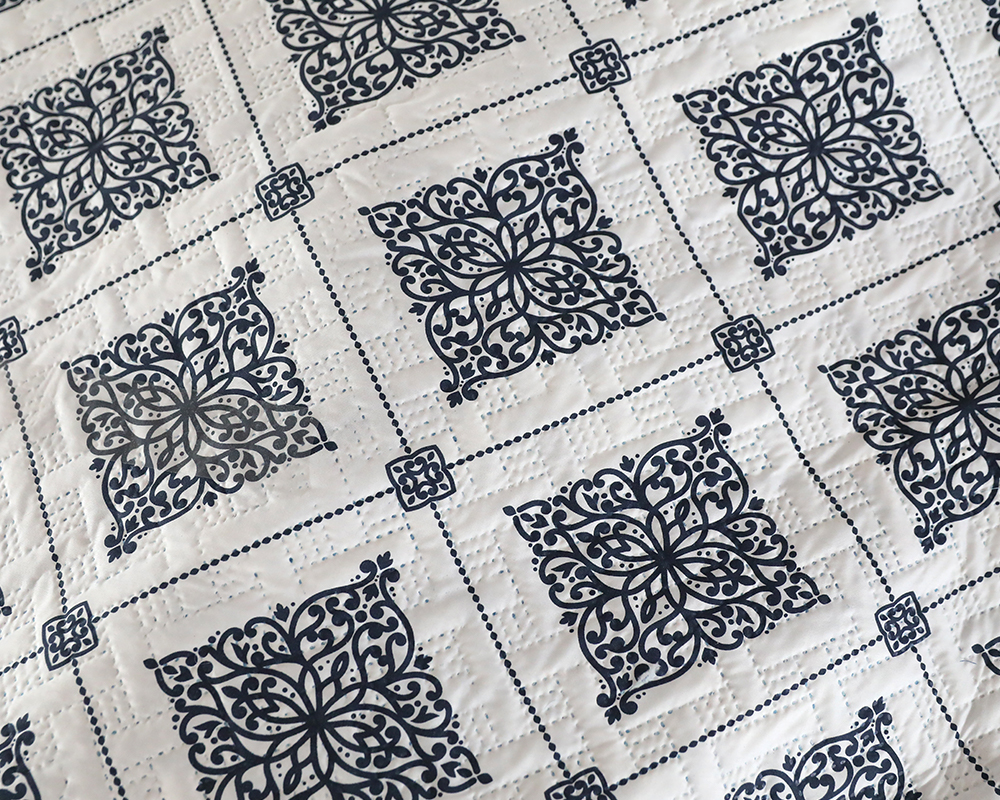
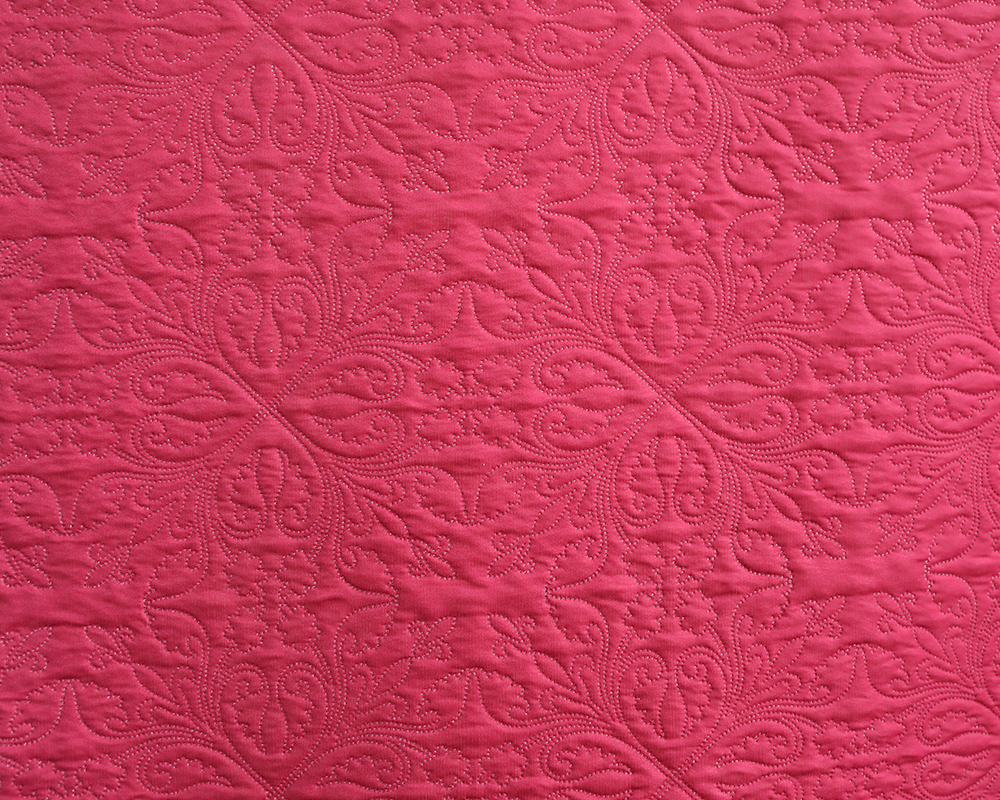
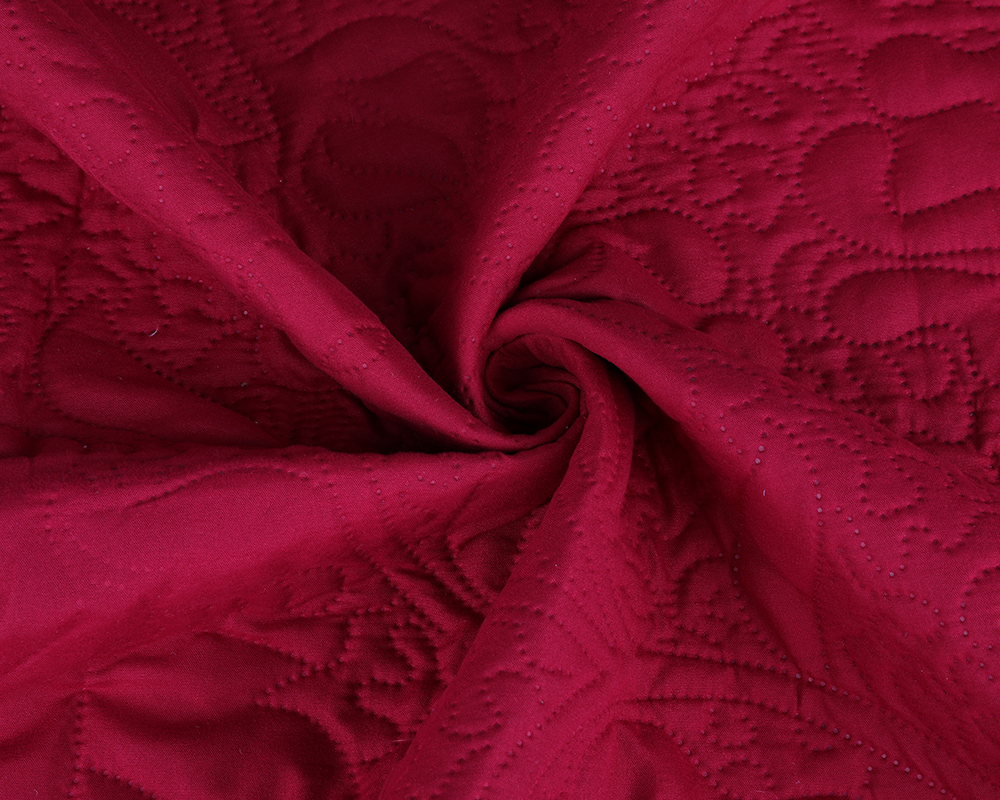
Ultrasonic quilting eliminates this failure mode entirely. The process uses high-frequency sound waves to bond fabric layers together through localized heat generation at the contact points — no needles, no thread, no perforations. The resulting bond is sealed rather than stitched, producing a seam that is inherently stronger under mechanical stress and does not degrade through repeated washing in the way conventional stitched construction does. For hotel operations sourcing quilted bedding products, dyed ultrasonic fabric for bedding production makes this construction method available in finished fabric form — ready to be cut and assembled into final bedding products. For background on how different stitching and bonding methods perform in professional bedding construction, the overview of stitching techniques used in professional bedding sets provides useful technical context.
Color and Print: Why White Isn't Always the Answer
The hospitality industry's default to white bedding is well-established and well-reasoned — but it is not universal. Resort properties, boutique hotels, lifestyle brands, and extended-stay facilities increasingly use color and pattern as deliberate elements of their room identity. A tropical resort that dresses its beds in bold printed covers is making a brand statement as much as an operational one.
For colored and printed bedding in hotel use, polyester's dye system delivers a decisive advantage: disperse-dyed polyester maintains color saturation across industrial laundry conditions that would fade reactive-dyed cotton within months. Properties that invest in distinctive printed bedding can sustain that investment only if the fabric holds its color through the hundreds of wash cycles its operational life demands.
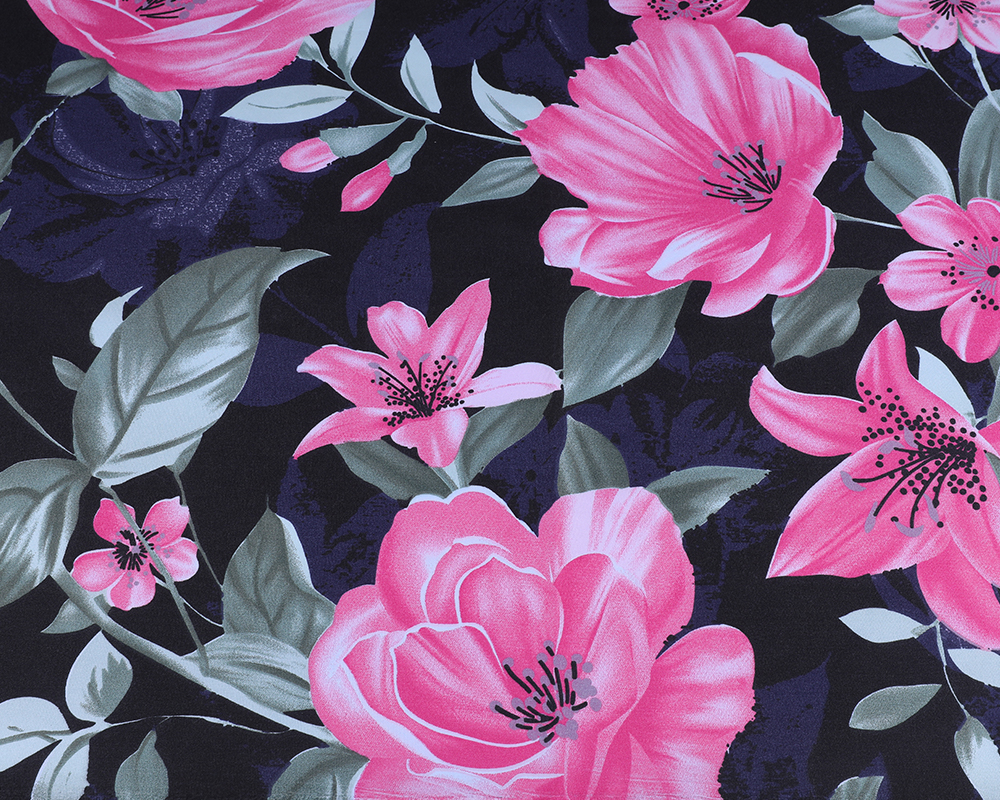
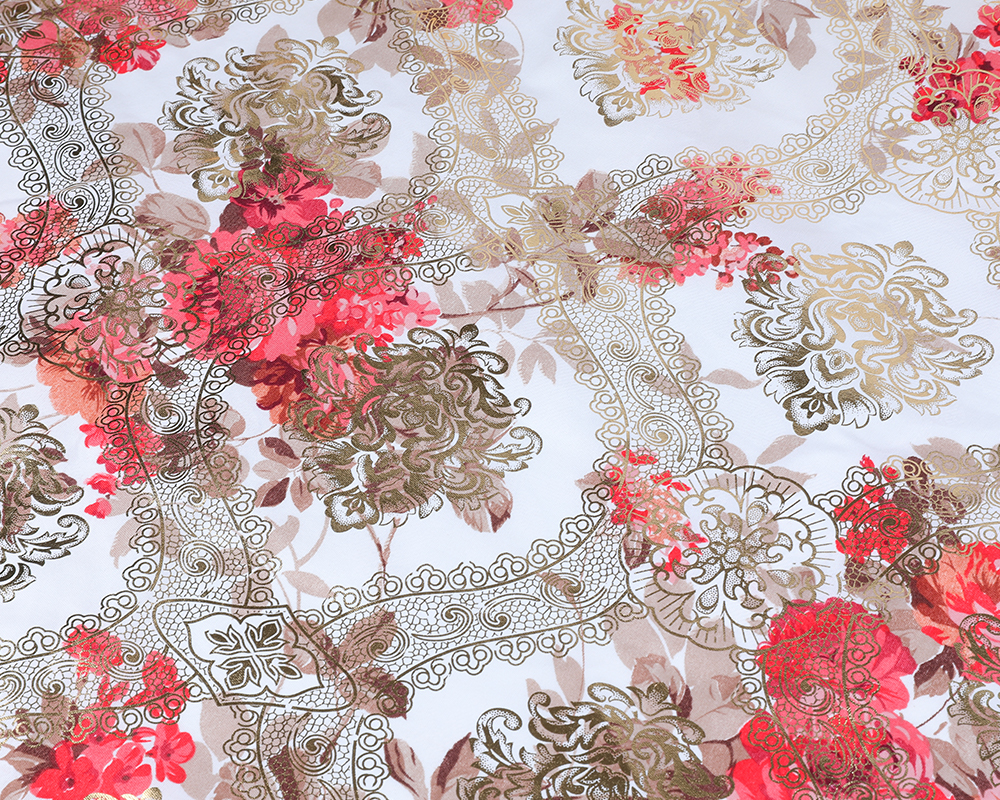
Polyester's receptiveness to both digital and screen printing also opens up design flexibility unavailable with cotton. Fine detail, photographic gradients, and pattern repeats that would require premium processing on cotton fabric are achievable at commercial scale on polyester, making it the practical substrate for any hotel property that uses bedding as part of its designed guest experience. For properties sourcing decorative bedding fabric with print or pattern, the range of printed polyester fabric options for decorative bedding covers the breadth of design directions available in commercially durable polyester construction.
How to Spec and Source Polyester Hotel Bedding Fabric
For procurement teams sourcing polyester hotel bedding fabric, the key specification decisions are:
- Fiber fineness (denier) — lower denier produces finer, softer hand feel but at higher cost. For sheet and pillowcase fabric, denier below 1.0 (microfiber range) is recommended for guest-facing surfaces. For backing, fill, and non-contact layers, standard denier ranges offer better cost efficiency.
- GSM (grams per square meter) — heavier GSM delivers greater durability and opacity. Hotel sheet fabric typically runs 80–120 GSM; quilt and comforter outer fabric runs 100–160 GSM depending on fill weight and construction.
- Dye system and wash-fastness rating — for any colored or printed fabric, request the wash-fastness test result (ISO 105-C06 or equivalent). A minimum rating of Grade 4 is the commercial standard for hotel linen that will face repeated hot washing.
- Construction method — for quilted products specifically, confirm whether construction is conventional stitched or ultrasonic bonded. The ultrasonic method carries a meaningful durability advantage in high-cycle institutional applications.
- Minimum order and lead time — for large hotel properties standardizing on a specific fabric, sourcing from a manufacturer that can supply consistent repeat orders of the same specification matters as much as the initial quality of the first shipment.
The commercial case for polyester hotel bedding is ultimately simple: it costs less per year of use, performs more consistently under industrial laundry conditions, and has closed the guest experience gap with cotton through advances in microfiber technology. For properties ready to source on that basis, the full product range across fabric types and finished bedding is the right place to start the specification conversation.